

 (479) 202-5200
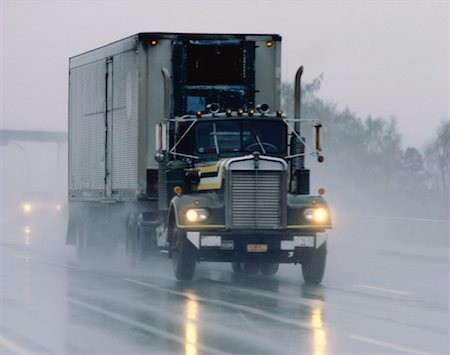 This year in Northwest Arkansas we have been fortunate to have had a mild winter. Other parts of the country have not been so fortunate. In those areas of the country that had a severe winter, the Federal Motor Carrier Safety Regulations that deal with winter weather driving become important. In 2005 the Federal Motor Carrier Safety Administration determined that of the 141,000 commercial motor vehicle crashes that occurred the previous year, 13% were due to bad weather conditions where the driver failed to slow down or otherwise take precautions.
The regulation states, “Extreme caution in the operation of a commercial motor vehicle shall be exercised when hazardous conditions, such as those caused by snow, ice, sleet, fog, mist, rain, dust, or smoke adversely affect visibility or traction. Speed shall be reduced when such conditions exist…” The regulation is triggered when visibility or traction is adversely affected. In addition to reducing speed, the regulation requires, “If conditions become sufficiently dangerous, the operation of the commercial motor vehicle shall be discontinued and shall not be resumed until the commercial motor vehicle can be safely operated…”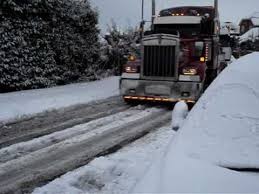
At Oliver Law Firm our team of lawyers follow how courts have interpreted the “extreme caution” standard. We believe the use of “extreme caution” created a heightened standard of care for commercial drivers if traction or visibility was adversely affected at the time of the collision. The weather conditions at the time of the collision can be shown by weather reports, statements of witnesses, and the crash report. Even if the commercial driver testifies that his visibility and traction were not affected until immediately before the crash, that can be overcome with other testimony.
If you have been involved in a collision with a semi or other type of commercial vehicle, and you have questions about how this regulation can be used to help prove your case, give us a call at 479-202-5200.
Oliver Law Firm, 3606 W. Southern Hills Blvd., Suite 200, Rogers, AR 72758
(Located just off Pleasant Grove Road in Rogers.)
Related Blogs:
Trucking Industry Regulations can Impact Accident Cases, May 8, 2014: https://www.oliverlawfirm.com/news/2014/may/08/trucking-industry-regulations-/
Checklist and Tips for Safe Winter Driving, January 5, 2017: https://www.oliverlawfirm.com/news/2017/jan/05/checklist-and-tips-safe-winter-driving/
More Articles For You
a Free Consultation